
Scroll to the bottom for photos of the actual product ↓
A complete air quality monitor you make your own
The full Aura AQ air quality monitor, built to order. A touchscreen device that reads the air around you, shows it at a glance, and charts the history over time.
No cloud and no account needed. Aura is ready to plug into your home automation (such as Home Assistant) via MQTT. If you are not into home automation, you can still open its web view over your network in any browser — on your phone, an unused tablet, or a smart TV — to see the readings on a second screen.
The firmware is open source and the device is fully hackable — add your own sensors, change the UI, or upgrade it later with your own case design.
What Aura measures and can do:
- Out of the box: Particulate matter (PM0.5, PM1, PM5 and PM10), VOCs, NOx, CO₂, Humidity, Temperature, and Barometric Pressure
- Optional add-on: a Carbon Monoxide sensor in our store. More sensors are already supported by Aura or planned for the future.
- Aura can also drive devices like ventilation units directly via a 0–10 V DAC. That add-on isn't available yet in our store, but you can add it to your Aura later.
Choose a desk, wall-mounted, or 7″ case — or skip the case and print your own — pick your colours, and order it assembled or as a kit below.
Case style
Body colour
WhiteIvory WhiteAccent colour
BlackCharcoal BlackExtra sensors Core sensors included in all builds
Built-in sensors are the Sensirion SEN66 and Bosch BMP388. Aura supports some other sensors too, and more will be added in the future.
Assembly
Your configuration
- CaseOriginal(3D printed)
- Display4.3" touchscreen
- Body colorWhite(Ivory White)
- Accent colorBlack(Charcoal Black)
- Built-in sensorsPM, VOC, NOx, CO₂, humidity, temperature, pressure
- Extra sensorsNone
- AssemblyAssembled
Quantities are limited, and our first orders ship to EU addresses only.
Handbuilt maker hardware · Made to order · Terms
Built and ready to switch on
We print the case in your chosen colours, assemble and test the unit — you finalise the setup and customise Aura to your liking.
The video below walks through what Aura is and what it measures, how to configure it, how you update it, and how you can put the web view up on your TV or wire it into home automation such as Home Assistant.
Press play to load this video from YouTube. Google may store cookies or similar data.
Or open the video directly on YouTubeWe are an officially licensed Aura maker
Cuzom holds the commercial licence from 21CNC Studio to sell Aura units, so everything shown here is covered when you buy from us. The videos sometimes assume you're a Project Aura backer building your own — you don't need to be one to order from us.
What we do for you
We build the unit, install the latest Aura firmware, and check that every sensor reports real readings before it ships — the SEN66 (PM, VOC, NOx, CO₂, humidity, temperature), the on-board pressure sensor, and any other sensor you chose. The real-time clock battery is already fitted, so the clock keeps time straight out of the box.
What's left for you
You can use Aura without Wi-Fi as a standalone device. Setting up the network fetches the date and time and lets you use the web view or integrate with home automation via MQTT. You'll also want to set your altitude above sea level (for accurate pressure). If you like, pick a UI theme or tweak the colours to taste. The video above shows how — it only takes a few minutes.
What you'll need
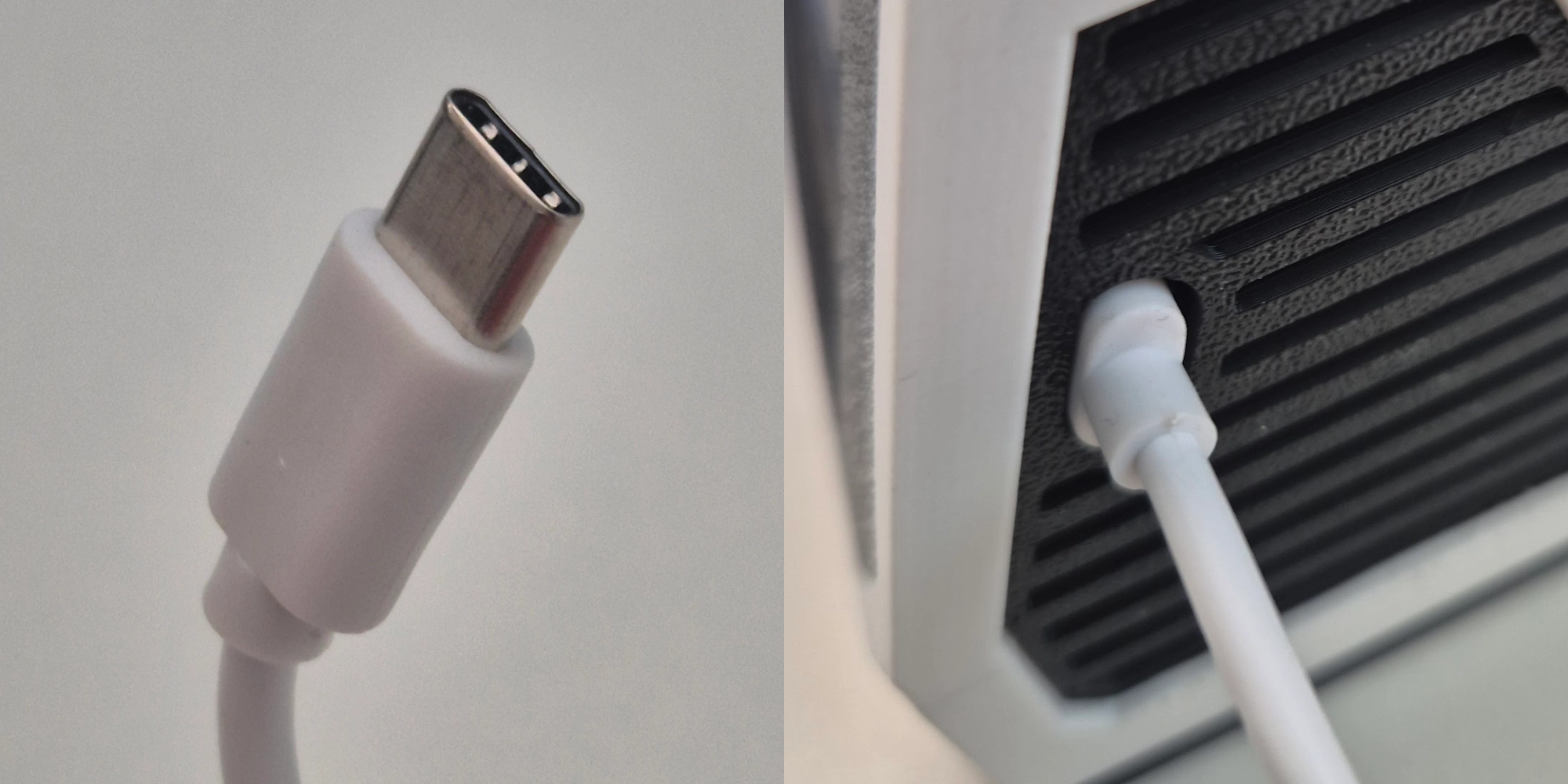
Just a USB-C cable and a 5 V USB power source — a phone charger or a powered USB port is plenty. Note that the current Aura case doesn't clear every USB-C plug shape: a rounded, slim connector like the one pictured below fits best, while bulky or squared-off housings may not seat fully.
About the 3D-printed case
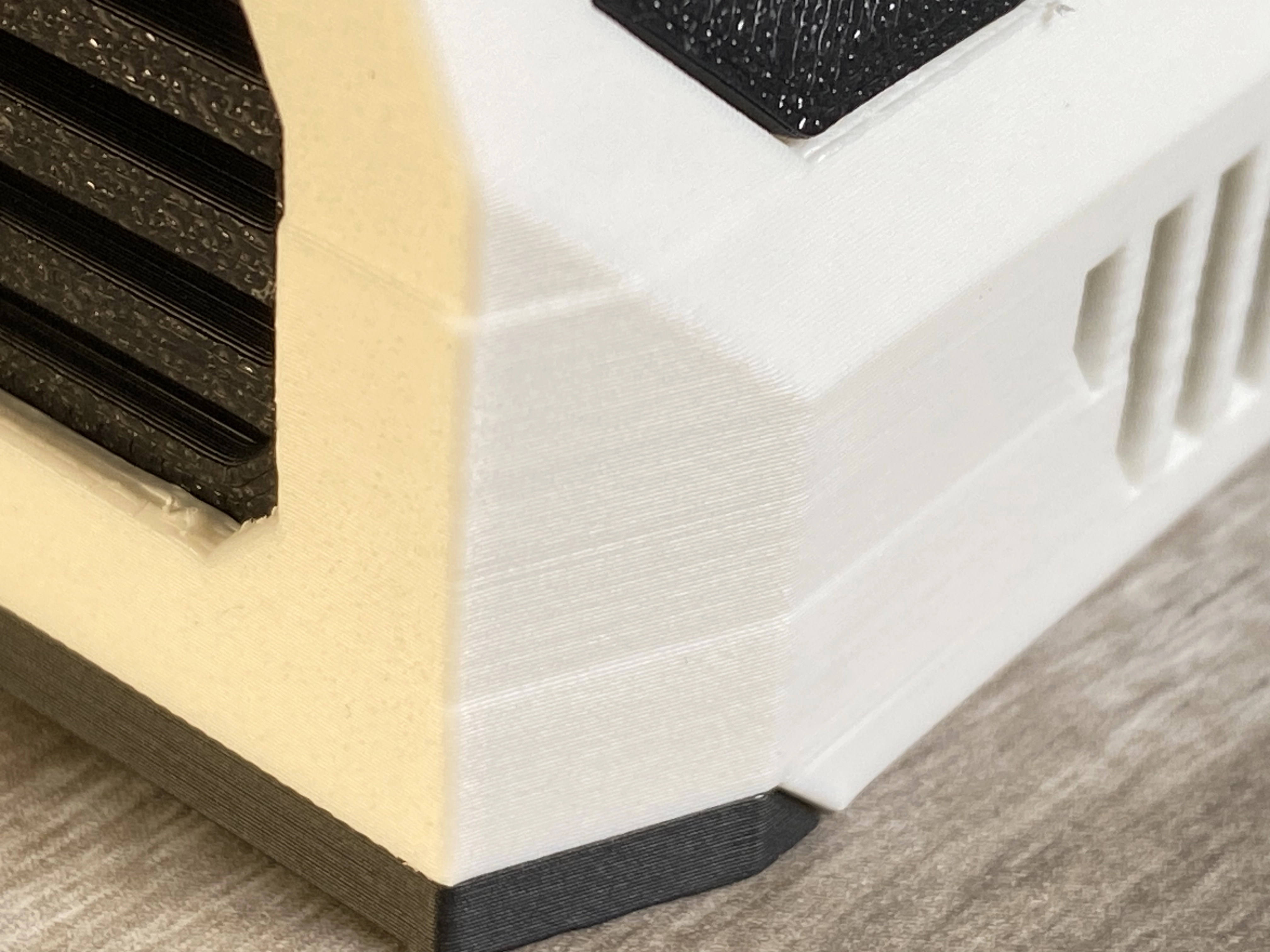
Every Aura case is 3D printed in the colours you choose — not an injection-moulded shell you'd find on most mass-produced products. Expect small imperfections: faint layer lines you can feel or the odd tiny blemish. They're normal for quality FDM prints and don't affect how Aura works. If a print doesn't meet our bar, we reprint it before it ships. We currently use a range of Bambu Lab printers with PLA Matte filament for most visible parts, and PETG for some internal mounting brackets.
Curious what's inside?
Just open the case with a screwdriver and take a look — or click the Kit option above to see Aura's internals part by part.